Most people reach for a sensitive toothpaste expecting it to fix the problem. For many it helps a little, then stalls. The reason is simple once you understand what is actually happening inside a sensitive tooth: there are two causes at play, and most toothpastes only treat one of them.
This article explains both causes, walks through what the published clinical evidence actually shows for the two main active ingredients, and why treating both at once is the logical approach. Every claim is numbered to its source so you can read it yourself.
What actually causes tooth sensitivity?
Sensitivity (dentists call it dentine hypersensitivity) happens when the inner layer of the tooth, the dentine, becomes exposed. Dentine is full of microscopic channels called tubules that lead to the nerve. When those channels are open and the surface is worn, cold, sweet or touch reaches the nerve and you feel the familiar sharp twinge.
So a sensitive tooth usually has two problems at the same time:
- An over reacting nerve. The nerve signal needs calming.
- A worn, open surface. The exposed tubules need sealing and the enamel needs rebuilding.
A toothpaste that only does one of these leaves the other half of the problem in place. That is why single active products often help, then plateau.
How potassium nitrate calms the nerve.
Potassium nitrate is the classic nerve calming active. Potassium ions build up around the nerve and reduce how strongly it fires, so the tooth reacts less.
The clinical evidence here is solid and long standing:
- A Cochrane systematic review of potassium nitrate toothpastes found a significant benefit on the air blast test (standardised mean difference 1.25 in favour of potassium nitrate) and on the tactile test.1
- A randomised controlled trial found 5% potassium nitrate toothpaste significantly reduced sensitivity versus placebo on every measured index after four weeks.2
- Another found 5% potassium nitrate gave significant relief within one week, increasing over four weeks.3
The limitation: potassium nitrate calms the nerve, but it does not rebuild the worn surface or seal the open tubules. It treats the symptom, not the exposed structure.
How hydroxyapatite repairs and seals the surface.
Hydroxyapatite is the mineral your enamel and dentine are mostly made of. A toothpaste form, nano hydroxyapatite, can physically plug the open tubules and deposit new mineral on the surface, so the pathway to the nerve is closed and the enamel is strengthened.
The evidence on the surface side is strong:
- A 2023 systematic review found hydroxyapatite reduced sensitivity by 39.5% versus placebo, and gave a 23% greater reduction than fluoride.4
- In a laboratory (in vitro) comparison, nano hydroxyapatite occluded 97.62% of dentine tubules, compared with 81.9% for a bioglass product and 65.42% for an arginine product.5
- A clinical trial found 15% nano hydroxyapatite toothpaste outperformed both fluoride and placebo for sensitivity.6
- A biomimetic zinc carbonate hydroxyapatite toothpaste significantly reduced sensitivity at four and eight weeks.7
The limitation: rebuilding the surface is the other half of the job. On its own it is not primarily a nerve calming agent.
Why one active is not enough.
Put the two together and the logic is hard to argue with. The nerve needs calming and the surface needs sealing and rebuilding. A product with only a nerve agent, or only a surface agent, is by design solving half the problem.
The research supports combining them rather than choosing one:
- A study found nano hydroxyapatite, alone or combined with potassium nitrate, was as effective as a leading bioglass repair product.8
- A combination formulation of hydroxyapatite, potassium nitrate and fluoride reduced sensitivity in clinical use.9
This is exactly the gap S3 was built to close.
What this means for choosing a toothpaste.
When you compare sensitive toothpastes, the useful question is not "which single ingredient is best" but "does this product treat both causes". A simple checklist:
- Does it calm the nerve (for example, potassium nitrate)?
- Does it seal the tubules and rebuild the surface (for example, hydroxyapatite)?
- Does it do both in one formula, so you are not left with half the problem?
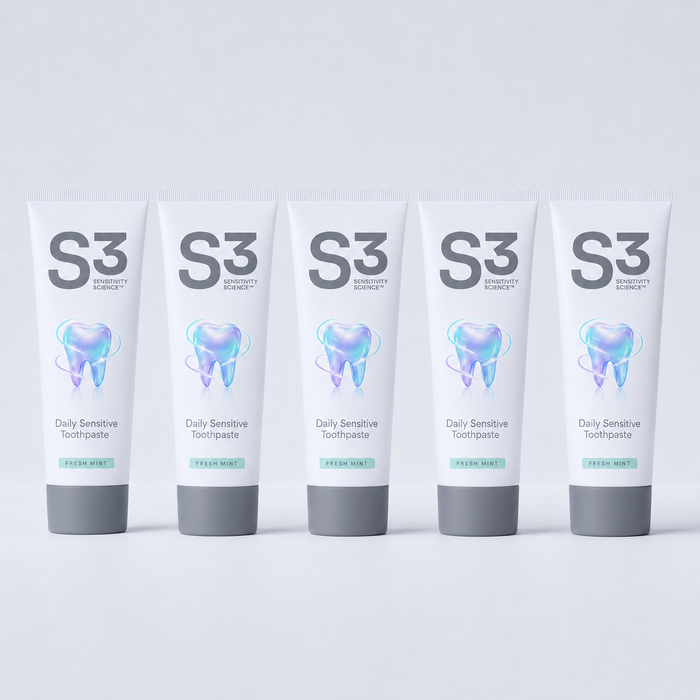
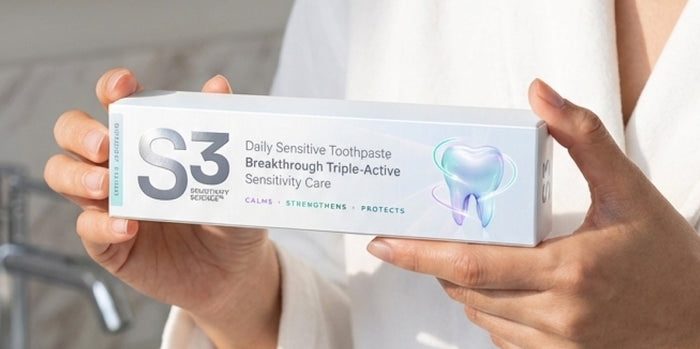
S3 Daily Sensitive Toothpaste was formulated around this. It combines three clinically backed actives in one daily formula: potassium nitrate (5%) to calm the nerve, nano hydroxyapatite (10%) to strengthen and repair the worn surface, and biomimetic hydroxyapatite (5%) to protect against the acids that wear enamel thin.
In independent testing at the University of Reading, S3 deposited three times more calcium and phosphorus on the tooth surface than the market leading sensitive toothpaste, and sealed 100% of exposed tubules versus 84% for the market leader. The actives behind the formula are supported by more than 120 clinical studies, which you can browse in full on our Science Studies page.
Frequently asked questions.
Is hydroxyapatite better than potassium nitrate for sensitive teeth?
They do different jobs. Potassium nitrate calms the nerve; hydroxyapatite seals the surface and rebuilds enamel. The evidence supports using both together rather than picking one, because a sensitive tooth usually has both problems at once.
How long does a sensitive toothpaste take to work?
Nerve calming actives like potassium nitrate can give relief within one to four weeks in clinical trials, while surface repair from hydroxyapatite builds up with continued daily use. In a consumer study, 87% of existing sensitive toothpaste users felt an improvement within seven days of switching to S3.
Does sensitivity come back?
If the underlying cause is not addressed, sensitivity tends to return. Treating both the nerve and the worn surface, and brushing daily so the benefit compounds, is the most reliable way to keep it down.
This article is for general education and is not a substitute for advice from your dentist. The studies cited examine the active ingredients used in sensitive toothpastes; individual results vary.