Stand in front of the sensitivity shelf and the toothpastes all start to look the same. Calm blues and clinical whites, the word “sensitive” in confident type, a promise of relief. If you’ve tried two or three of them and still hesitate before a cold drink, you’d be forgiven for concluding they’re all much of a muchness. They are not. The differences are real — they’re just hidden in how each one works. So before we get to what makes the best toothpaste for sensitive teeth, it’s worth understanding what these products are actually trying to do.
What a sensitive toothpaste is actually working against.
Sensitivity comes from exposed dentine — the softer layer beneath your enamel, threaded with microscopic channels that lead to the nerve. When enamel thins or gums recede, those channels are left open, and triggers like cold and sweetness set the nerve off.1 It’s a common problem: research suggests around one in three adults live with some degree of sensitivity.2
There are two evidence-backed ways to ease that. You can calm the nerve so it reacts less — the route potassium nitrate takes, and the one a Cochrane review found significantly reduced sensitivity on objective measures.3 Or you can occlude and strengthen the surface so triggers can’t reach the channels as easily — the route hydroxyapatite takes, an enamel-like mineral that helps seal the exposed channels, strengthen the surface and remineralise it, with a 2023 systematic review of 44 trials supporting its role in reducing sensitivity.4 Almost every sensitivity toothpaste on the shelf leans on one or the other.
How to read a sensitive toothpaste, not just trust the label.
Turn the box over. The active ingredients tell you which job the toothpaste is built to do.
- Nerve-calming actives — most often potassium nitrate. These work over time to soothe the nerve so it’s less reactive. The catch: they don’t do anything for the worn enamel that exposed the nerve in the first place.
- Surface-sealing and strengthening actives — such as hydroxyapatite, the enamel-like mineral that can settle into and occlude the exposed channels, strengthen the surface and help remineralise it. Its benefits hold up over the long term, too: an 18-month randomised trial supports hydroxyapatite’s role in protecting against new enamel damage.6 On its own, though, it doesn’t calm an already over-reactive nerve.
Here’s the thing the category rarely admits: a sensitive tooth usually has both problems at once. The nerve is over-reacting and the surface is worn. A toothpaste that only does one job leaves the other half of the problem in place — which is exactly why so many people find that single-active solutions help a little, then stall. It isn’t your fault the relief didn’t last. It’s that you were sold half an answer.
It isn’t your fault the relief didn’t last. It’s that you were sold half an answer.
What to look for in the best toothpaste for sensitive teeth.
Cutting through the shelf, a genuinely strong sensitivity toothpaste should tick most of these boxes:
- It calms the nerve and strengthens the enamel surface — not just one of the two.
- The active ingredients are present at meaningful, evidence-backed levels, not just listed in trace amounts for the label.
- It’s backed by real evidence rather than a vague “clinically tested” line.
- It’s designed for daily, long-term use, because sensitivity relief builds with consistency — the NHS notes sensitivity toothpaste can take a few weeks to work.1
- It still does the everyday job of a good toothpaste — fluoride for enamel, a clean feel, gentle on the gums.
Hold the shelf to that standard and the field thins out quickly. Most products are built around a single mechanism. Very few are designed to do all three things sensitive teeth need.
The best toothpastes for sensitive teeth, ranked.
With that framework in mind, here is how the main options on the market compare — and where each one sits. The S3 ranking reflects what makes the biggest difference: treating sensitivity as a whole problem, not a single symptom. Calming the nerve matters. So does strengthening what’s around it. For people who’ve tried one or two options and still flinch at the cold drink, the gap is almost always the structural side — and that’s where S3 goes further.
| Toothpaste | Calms | Strengthens | Protects | Best for |
|---|---|---|---|---|
| S3 Daily Sensitive ToothpasteTop pick · triple-active | ✓ | ✓ | ✓ | Treating the nerve and the worn surface together, in one daily formula. |
| Sensodyne Repair & Protect | ✓ | ✓ | – | Surface repair alongside nerve calming. |
| Colgate Pro-ArginSensitive Pro-Relief | – | – | ✓ | Fast comfort by sealing the exposed dentine channels. |
| Potassium-nitrate-only pastes | ✓ | – | – | Not recommended alone — slower, and the worn surface is left unaddressed. |
Based on each product’s active mechanism. S3 actions per the cleared formula; competitor entries reflect their stated mechanisms.
Why we built S3 the way we did.
S3 exists because we didn’t think the category was good enough. For years, sensitivity care has asked people to choose between calming the nerve and rebuilding the surface, as if a sensitive tooth only had one problem. We took a more complete approach — because partial solutions leave people hesitating before the cold drink.
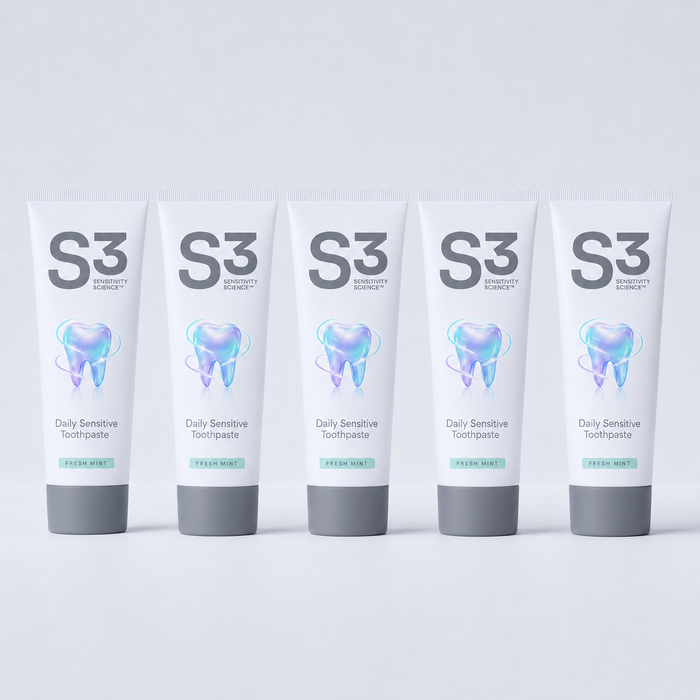
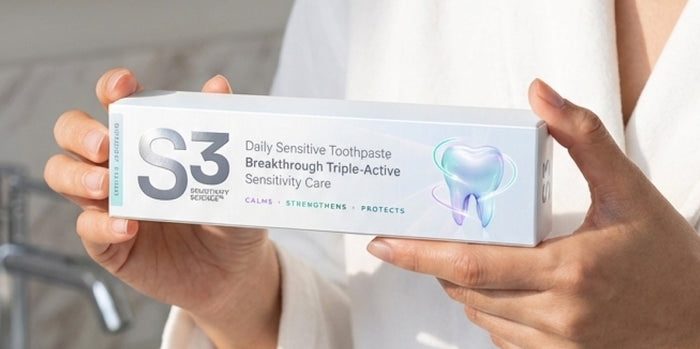
S3 Daily Sensitive Toothpaste is built on triple-active S3 Repair Technology™ (patent-pending), designed to deliver the three actions sensitive teeth need at the same time:
The principle behind combining these mechanisms has direct clinical support: in a 2021 randomised trial, a toothpaste pairing nano-hydroxyapatite with potassium nitrate eased sensitivity comparably to an established desensitising toothpaste.5 In S3’s own consumer testing, 87% of people saw an improvement within seven days, with the active getting to work at the enamel surface within two minutes of brushing. It’s developed by leading oral-care experts, and it’s vegan and cruelty-free.
S3 costs more than a standard sensitivity toothpaste, and we’d rather be straight about why. You’re not paying for the packaging. You’re paying for three clinically considered actives at levels meant to actually work, in one daily formula — instead of the single mechanism most of the category settles for. For people who’ve worked through the shelf and still hesitate before the cold drink, that difference is the whole point.
The honest bottom line.
The best toothpaste for sensitive teeth is the one that treats sensitivity as the whole problem it is — calming the nerve, strengthening the enamel, and protecting the surface, every day. Whatever you choose, read the back of the box, pick something built for consistent use, and give it a few weeks. And if one tooth stays stubbornly sensitive on its own, see your dentist before you keep switching products.
New to all this? Start with why are my teeth sensitive. Dealing with sensitivity after dental work? Read tooth sensitivity after a filling.
Frequently asked questions.
What is the best toothpaste for sensitive teeth?
The best sensitive toothpaste is one that does more than one job — calming the over-reactive nerve and strengthening the worn enamel surface together, with active ingredients at meaningful levels and a formula designed for daily use. Many products only tackle one of the two, which is why relief often stalls.
How long does sensitive toothpaste take to work?
Sensitivity relief builds with consistent daily use rather than arriving instantly; the NHS suggests allowing a few weeks.1 Many people notice an improvement within the first week, with more over the following weeks. Using it twice a day, every day, matters more than any single brushing.
Is more expensive sensitive toothpaste worth it?
It depends on what the price buys. A premium that pays for packaging isn’t worth it; a premium that pays for several evidence-backed actives at effective levels — calming, strengthening and protecting in one formula — is a different proposition, especially if single-action products haven’t lasted for you.
Can I use sensitive toothpaste every day?
Yes. Sensitivity toothpaste is designed for daily, long-term use, and consistency is exactly what makes it work. The nerve-calming and enamel-strengthening actions build up over time with twice-daily brushing.