You’ve had a filling, the anaesthetic has worn off, and now the tooth twinges at cold water or a sharp intake of breath. It is an unsettling feeling — the work was meant to fix the tooth, not leave it reacting. The reassuring news is that some sensitivity after a filling is common and usually temporary. The useful news is that there are clear signs telling you which kind you’re dealing with.
Why is my tooth sensitive after a filling?
Having a cavity treated involves removing decay and placing a filling material very close to the tooth’s inner layers. The tooth has been through a fair amount, and it often takes a little while to settle. A few specific things can leave it reactive in the meantime.
- The tooth is recovering. The nerve inside a tooth can stay mildly inflamed for a short period after treatment, which makes it quicker to react to cold and pressure.
- A deep filling sits close to the nerve. The nearer the work is to the centre of the tooth, the more likely some short-term sensitivity is.
- The bite is fractionally high. If the new filling sits a touch proud, you’ll feel it every time you bite down, and the tooth may ache. This one is a quick fix — your dentist can adjust it in minutes.
- Two metal surfaces meet. Occasionally a new metal filling near another metal restoration produces a brief, sharp zing. It typically fades.
In most cases, this kind of sensitivity eases over a few days to a couple of weeks as the tooth recovers.
What’s normal, and what isn’t.
It helps to know where the line sits, so you can stop worrying about the ordinary and act on the genuine.
Usually normal, and easing week by week
- A brief twinge from cold or sweet things that fades within seconds.
- Mild tenderness when biting that gradually settles.
- Sensitivity that is clearly improving, not worsening, as the days pass.
Worth a call to your dentist
- Pain that gets worse over time rather than better.
- A sharp pain every time you bite — often a filling that needs a small adjustment.
- Sensitivity still going strong beyond two to four weeks.
- Lingering, throbbing or spontaneous pain, or pain that disturbs your sleep.
That last group can indicate the bite needs adjusting or the nerve needs a closer look. As a general rule, the NHS advises seeing a dentist for toothache that lasts more than two days, so persistent or worsening pain after a filling is a reasonable prompt to get it checked.1 None of it means you did anything wrong — it simply means the tooth needs a little more attention.
None of it means you did anything wrong — it simply means the tooth needs a little more attention.
How to ease a sensitive tooth after a filling.
While a recovering tooth settles, you can make it a lot more comfortable.
- Stay away from extremes for a few days — very cold, very hot and very sweet are the usual culprits.
- Chew on the other side for a little while to give the tooth a rest.
- Keep brushing gently with a soft brush. Avoiding the area altogether lets plaque build up, which doesn’t help.
- Switch to a sensitivity toothpaste and use it consistently. Gently working a little over the tooth and leaving it, rather than rinsing immediately, lets the active ingredients get to work — though, as the NHS notes, give it a few weeks rather than expecting an overnight change.1
- If you need it, a standard over-the-counter pain reliever can take the edge off while the tooth recovers.
Supporting the tooth as it settles.
A tooth that has just been restored benefits from daily care that does more than mute the symptom. It helps to calm the reactive nerve, and it helps to keep the surrounding enamel strong while everything settles.
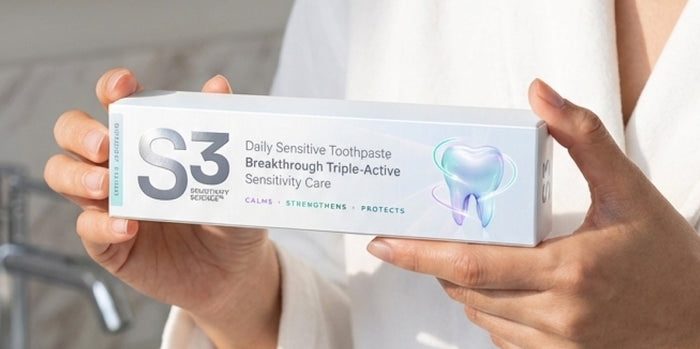
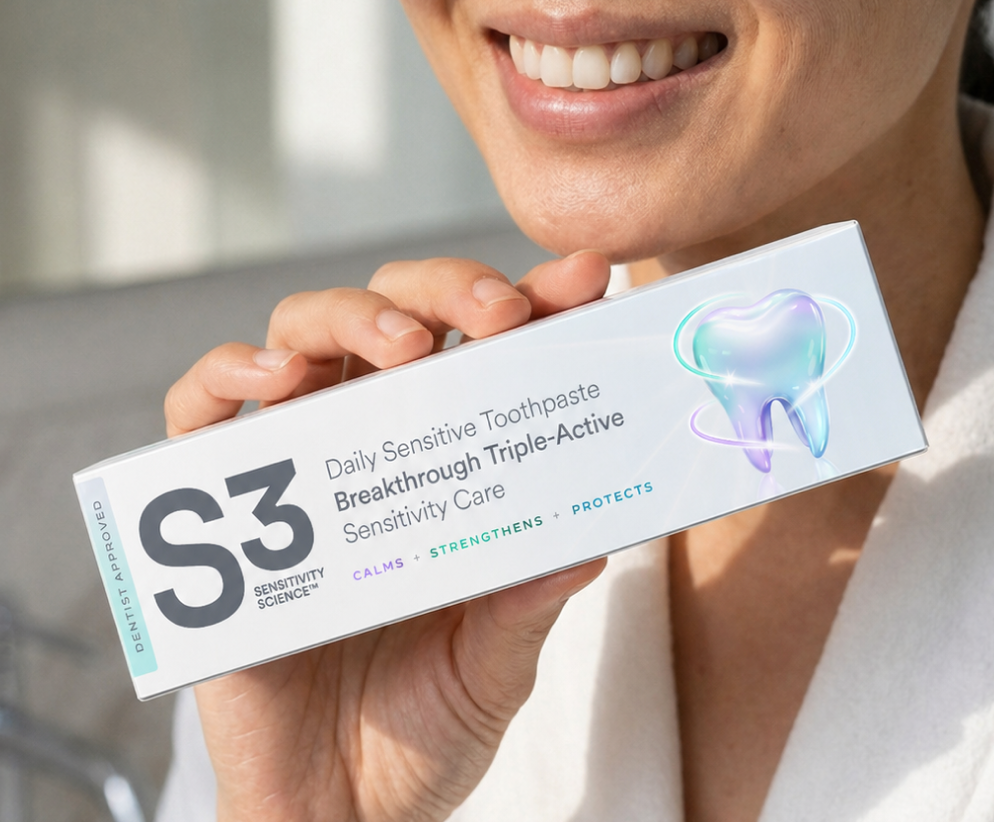
This is the thinking behind S3 Daily Sensitive Toothpaste. Its triple-active S3 Repair Technology™ (patent-pending) is designed to calm, strengthen and protect at once. Potassium nitrate at the clinically proven 5% dose helps soothe the nerve’s response to cold and pressure — often exactly what a recently filled tooth is reacting to, and the mechanism a Cochrane review found significantly reduced sensitivity on objective measures.2 Alongside it, nano-hydroxyapatite and biomimetic hydroxyapatite help strengthen the enamel surface around the restoration and form a protective mineral layer, like an invisible bandage over the area. Used twice a day, it supports the tooth through the settling period and well beyond it.
One honest caveat: toothpaste supports a recovering tooth, it doesn’t replace your dentist. If sensitivity after a filling is worsening, or it hasn’t lifted after a few weeks, book a check-up. A high bite or an irritated nerve is straightforward to assess and far easier to deal with early.
For the wider picture, read why are my teeth sensitive. For a flare-up today, see how to stop sensitive teeth pain.
Frequently asked questions.
How long does tooth sensitivity last after a filling?
Usually a few days to two weeks as the tooth settles. Deeper fillings can take a little longer. Sensitivity that lasts beyond two to four weeks, or that worsens rather than eases, should be checked by your dentist.
Is it normal for a tooth to be sensitive to cold after a filling?
Yes. Short, sharp reactions to cold that fade within seconds are common while a tooth recovers, and they typically reduce week by week. A consistent sensitivity toothpaste can make the settling period more comfortable.
Why does my filling hurt when I bite down?
A sharp pain on biting often means the filling is sitting fractionally high. It’s a common, quick fix — your dentist can adjust it in a short appointment, and the relief is usually immediate.