If you’re experiencing tooth sensitivity, the first thing to know is that it’s normal — and you’re in good company. Around one in three adults lives with some degree of tooth sensitivity.34 It is one of the most common dental complaints there is. That doesn’t make it any less painful or frustrating, and it certainly doesn’t mean you should just put up with it. The good news is that there are real, effective solutions — including simple steps to ease the pain immediately — and most of the lasting ones start with what you brush with every day.
The right toothpaste: the most important step you can take.
If you’re looking for the single most impactful change you can make, it is choosing the right toothpaste. Not all sensitivity toothpastes work the same way — and understanding the difference helps you pick one that actually delivers.
Two key ingredient types matter for sensitive teeth:
- Potassium nitrate — the classic desensitising ingredient. It works by calming the nerve inside the tooth over time, so it reacts less to cold, heat and sweet triggers. It helps, but it’s a slower mechanism; expect results over several weeks rather than days, and it doesn’t address the worn enamel surface itself.
- Enamel-strengthening and surface-repairing ingredients — such as hydroxyapatite. These help seal the microscopic openings in exposed dentine and rebuild the enamel surface. They tend to work more quickly, because they’re addressing the structural problem at the source.
The best sensitivity toothpastes combine both. A toothpaste that contains only potassium nitrate will work more slowly and leave the worn enamel surface untouched — which is why many people find single-action products help a little, then stall.
Our recommendations, in order
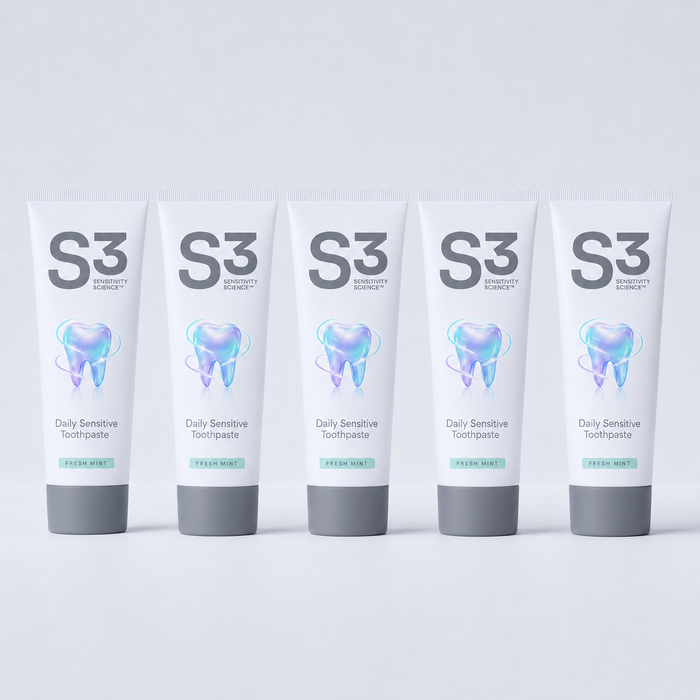
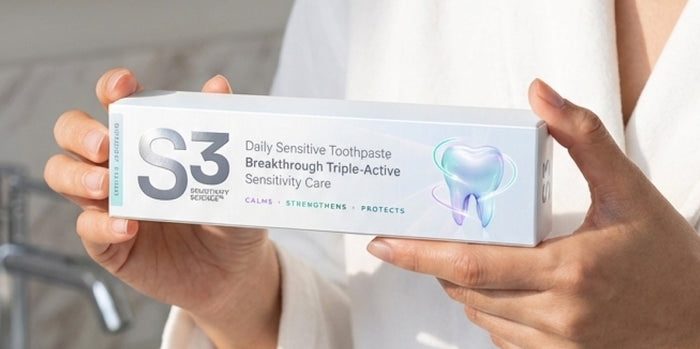
- S3 Sensitivity Science Daily Sensitive Toothpaste (top pick) — a sensitivity toothpaste built around a triple-active benefit for sensitive teeth: it calms sensitive areas with 5% potassium nitrate, strengthens the tooth surface with nano-hydroxyapatite, and protects against lasting sensitivity triggers with biomimetic hydroxyapatite. Calm, strengthen, protect — in one daily formula, with fluoride for everyday decay protection. For people who’ve worked through the shelf and still hesitate before the cold drink, this is the reason.
- Sensodyne Repair & Protect — a solid second choice, with enamel-strengthening ingredients alongside its desensitising action. Good for people who want surface repair alongside nerve calming.
- Colgate Pro-Argin (sold as Colgate Sensitive Pro-Relief) — works differently again: it helps seal the exposed dentine channels and supports a protective surface layer, with a good evidence base for fast relief. A strong option when quick comfort is the priority.
- What we wouldn’t recommend — a toothpaste that contains only potassium nitrate. It’s not a bad ingredient — it’s a proven one — but on its own it works slowly and leaves the structural side of sensitivity unaddressed.
Around the home: things that help in the meantime.
Alongside switching to the right toothpaste, a few simple habits ease a flare-up and support your teeth from day to day.
- Rinse with lukewarm water. Not cold, not hot — body temperature gives the nerve nothing to react to and clears away whatever set it off.
- Apply toothpaste directly and leave it. Massaging a little sensitivity toothpaste over the tender spot with a fingertip, then leaving it rather than rinsing it straight away, lets the active ingredients stay where they’re needed for longer. You get more out of the product you’re already using.
- Step away from the trigger briefly. If it was an iced drink, an acidic juice or something sweet, give it a few minutes before going back in.
- Try a warm salt-water rinse. It can soothe irritated gums around a sensitive area.
- Use an over-the-counter pain reliever if needed. If the pain is sharp and persistent, it can bridge the gap — but treat it as a short-term bridge, not a solution.
The NHS is clear that sensitivity toothpaste typically takes a few weeks of regular use to work — it isn’t a same-second fix, and anything claiming otherwise is overstating its hand.1 You can quieten a flare-up quickly. The toothpaste does the longer, more important work.
When the pain is telling you something.
Most everyday sensitivity is a nuisance rather than an emergency. But some pain deserves a dentist’s eye rather than a home remedy. The NHS advice is a useful rule of thumb: see a dentist if you have toothache that lasts more than two days, or pain that is severe.1 It’s also worth booking if the pain wakes you at night, lingers long after the trigger has gone, or is focused on one tooth that looks discoloured or feels different to bite on. Those can point to something — a crack, decay, an issue below the gum — that toothpaste alone is not designed to address. Calming the symptom is useful. Understanding the source is better.
How to help sensitive teeth for the long term.
Here is the part the category tends to skip past. Easing a flare-up is reactive. Helping sensitive teeth is something you do quietly, every day, until the reaction itself becomes the exception.
Sensitivity, in most cases, comes down to two things happening at once. The protective enamel and gum that normally shield the inner layer of your tooth have worn thin or pulled back in places, exposing thousands of microscopic channels that run down to the nerve. When something cold, hot, sweet or acidic reaches those openings, fluid shifts inside the channels and the nerve registers it as that short, sharp twinge — the long-accepted hydrodynamic explanation for sensitivity, first described by Martin Brännström in the 1960s.3 So a genuinely useful daily routine has to do more than numb the nerve, and more than patch the surface. It has to do both, and keep the enamel itself in better condition over time.
A few habits make a real difference, and they line up with the Oral Health Foundation’s own advice on managing sensitivity:2
- Use a soft-bristled brush and ease off the pressure. Firm scrubbing wears enamel and nudges the gum back — the opposite of what sensitive teeth need.
- Wait a while after anything acidic — wine, citrus, fizzy drinks — before brushing. Enamel is softened straight after, and brushing too soon can wear it faster.
- Be consistent. The mechanisms that help sensitivity build up with daily use. Skipping days undoes quiet progress.
- Choose your toothpaste deliberately. This is where most of the long-term work happens, and where the differences between products actually matter.
Where S3 comes in.
Most sensitivity toothpastes pick one job. Some calm the nerve. Others lay down a layer over the exposed surface. Both approaches have real evidence behind them — potassium nitrate’s nerve-calming effect was confirmed by a Cochrane review of randomised trials, which found it significantly reduced sensitivity on objective measures5 — but each, on its own, is partial. And partial solutions are why so many people decide sensitivity is just something to live with.
We built S3 Daily Sensitive Toothpaste around a different idea: that sensitive teeth need three things, not one. Our triple-active S3 Repair Technology™ (patent-pending) is designed to calm, strengthen and protect at the same time. Potassium nitrate, at the clinically proven 5% dose, helps soothe the nerve’s response to triggers. Nano-hydroxyapatite and biomimetic hydroxyapatite — enamel-like minerals small enough to settle into those pinhole-sized openings — help occlude the exposed channels, strengthen the enamel surface and remineralise it, forming a protective mineral layer like an invisible bandage. Hydroxyapatite is well studied for exactly this: a 2023 systematic review pooling 44 clinical trials supports its role in reducing dentine sensitivity.6 Fluoride works alongside it too, doing its established job of helping protect against decay.
Calm the nerve, rebuild the surface, protect what’s there — every day, until the iced coffee is just an iced coffee again.
In S3’s own consumer testing, 87% of people saw an improvement within seven days, with the active reaching the enamel surface within two minutes of brushing.
Want to understand what’s actually happening inside a sensitive tooth? Read why are my teeth sensitive. Choosing a new toothpaste? Here’s how to pick the best toothpaste for sensitive teeth.
Frequently asked questions.
How can I stop sensitive teeth pain immediately at home?
Rinse with lukewarm water, move away from the trigger, and gently apply a sensitivity toothpaste to the tender area with a fingertip rather than rinsing it straight off. A warm salt-water rinse can settle irritated gums. These calm a flare-up quickly; lasting relief comes from consistent daily care.
Does sensitive toothpaste work instantly?
No, and be wary of anything claiming it does. The NHS notes that sensitivity toothpaste can take a few weeks of regular use to take effect.1 The nerve-calming and enamel-strengthening actions build with daily use, so many people notice a difference within the first week and more over the weeks that follow.
When should I see a dentist about tooth sensitivity?
The NHS advises seeing a dentist for toothache that lasts more than two days, or pain that is severe.1 Also book if the pain wakes you at night, lingers long after the trigger, or is focused on one tooth that also looks or feels different.