Teeth are not the first thing anyone expects pregnancy to change. Yet a lot of people find that around the second trimester, cold drinks start to sting, gums bleed when they never used to, and brushing becomes something to get through rather than get on with. Most of it has a straightforward explanation, and almost all of it settles.
Why pregnancy changes what your mouth does.
Three things happen at once, and they compound.
The first is hormonal. Raised oestrogen and progesterone increase the blood flow to the gums and change how gum tissue responds to plaque, so the same amount of plaque that caused no trouble before pregnancy can now produce swollen, tender gums that bleed when brushed. This is common enough to have its own name, pregnancy gingivitis, and the Oral Health Foundation notes that gum problems are one of the most frequent oral changes in pregnancy.13
The second is acid. Morning sickness, reflux and heartburn all bring stomach acid into the mouth, and stomach acid is far stronger than anything in a diet. Repeated over weeks, it softens enamel, and softened enamel means less protection over the dentine and the microscopic channels running through it towards the nerve.
The third is simply that brushing gets harder. Sore gums, a heightened gag reflex, tiredness, and a toothpaste flavour that suddenly feels overwhelming all make thorough brushing less likely at exactly the point it matters more.
Sensitivity, specifically.
Sensitivity in pregnancy usually comes from one of two routes, and often both.
Acid erosion is the first. Softened enamel exposes the dentine beneath, and once those channels are open, cold, sweet and hot things reach the nerve. This is why sensitivity that follows a bad run of morning sickness often shows up on the inner surfaces of the front teeth, where stomach acid pools.
Gum changes are the second. Swollen gums recede, and receded gums expose root surface, which has no enamel over it at all and is reactive from the moment it is uncovered.4 Gum inflammation that is not brought under control can progress, so it is worth taking seriously rather than waiting out.3
The good news is that both are usually temporary. The hormonal effect resolves after the birth, and softened enamel can take mineral back in. What matters is limiting the damage while it is happening.
See a dentist, and it is free.
This is the single most useful thing in this article, and a lot of people do not know it. In the UK you are entitled to free NHS dental appointments and treatment while pregnant, and for 12 months after your baby is born.2 You will need a maternity exemption certificate, which your midwife or GP can arrange.
Routine dental care is safe during pregnancy, and check-ups and cleaning are actively worth having, because a professional clean removes the plaque that hormonal gums are over-reacting to. Tell your dentist you are pregnant and how far along, so they can plan around it. The second trimester is generally the most comfortable time for anything non-urgent. Do not put off treatment for a problem that is actually hurting: an infection is worse for you than the treatment for it.
One thing to leave until after: tooth whitening is not recommended during pregnancy or while breastfeeding, and any reputable dentist will decline it.
Dental care is free while you are pregnant and for a year afterwards. It is the most underused entitlement in the whole of pregnancy.
What helps day to day.
- Do not brush straight after being sick. The enamel is softened and brushing scrubs at it. Rinse with plain water, or with a fluoride mouthwash, and wait about an hour.
- Keep brushing the sore gums. It feels counterintuitive when they bleed, but the bleeding is caused by plaque and it settles once the plaque is gone. Use a soft brush and a gentle touch rather than stopping.5
- Switch flavour if the taste is the problem. A milder toothpaste you actually use twice a day beats a strong one you avoid. Some people find brushing at a different time of day helps with the gag reflex.
- Spit, do not rinse. Rinsing straight after brushing washes away the fluoride and the other actives you have just applied.
- Manage the snacking, not the guilt. Grazing is normal in pregnancy. Where you can, keep sugary and acidic things to mealtimes rather than spread across the day, and drink water in between.
- Use a desensitising toothpaste if cold is the issue. Potassium-based pastes work by reducing the nerve's response, and a Cochrane review has examined potassium-containing toothpastes for dentine sensitivity.6
Where S3 comes in.
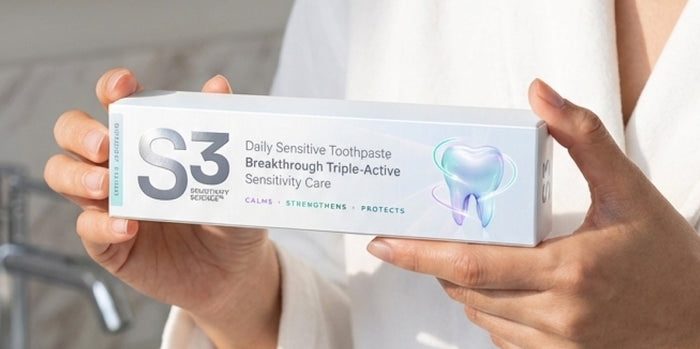
S3 Sensitivity Science™ makes a daily toothpaste built for teeth that have a calming problem and a structural one at the same time, which is a fair description of what pregnancy tends to produce. Our patent-pending S3 Repair Technology™ pairs potassium nitrate with two forms of hydroxyapatite, alongside full adult-strength 1450 ppm fluoride.
As with anything you use regularly during pregnancy, check with your dentist, midwife or GP if you are unsure. They know your history, and a dental appointment costs you nothing right now.
See S3 Daily Sensitive Toothpaste, or read more about why teeth become sensitive.
Frequently asked questions.
Is it normal for teeth to be sensitive during pregnancy?
Yes, it is common. Hormonal changes make gums more reactive to plaque and prone to receding, and morning sickness or reflux brings stomach acid into the mouth, which softens enamel. Both expose the dentine underneath, and that is what produces sensitivity to cold and sweet things. It usually settles after the birth.
Can I go to the dentist while pregnant?
Yes, and you should. Routine check-ups and cleaning are safe during pregnancy and worth having, because a professional clean removes the plaque that hormonal gums are over-reacting to. In the UK, NHS dental care is free while you are pregnant and for 12 months after the birth, using a maternity exemption certificate. Tell your dentist you are pregnant so they can plan around it.
Why are my gums bleeding when I brush during pregnancy?
Raised hormone levels increase blood flow to the gums and change how they respond to plaque, so gums swell and bleed more readily. It is often called pregnancy gingivitis. Keep brushing gently with a soft brush rather than avoiding the area, and see your dentist, since a professional clean usually resolves it.