Cold is almost always the first thing to hurt. Not sweet, not hot, not pressure. Cold. There is a reason for that, and it is not that cold is somehow more aggressive than the rest. It is that cold moves something inside the tooth faster than anything else can.
Why cold, and not something else first.
The tooth is built in layers. Enamel outside, dentine beneath it, and running through that dentine are thousands of microscopic channels called dentinal tubules, leading inward towards the nerve. Each one is filled with fluid.
While the enamel is intact and the gum sits where it should, those channels are sealed off. Once they are exposed, through worn enamel or a receded gum, the fluid inside them is connected to the outside world. And fluid contracts when it cools. A cold drink hitting an exposed surface pulls that fluid outward, sharply and almost instantly, and the nerve reads the movement as pain. This is the hydrodynamic theory, and it is still the accepted explanation for how dentine sensitivity works.
Cold produces the fastest and largest fluid movement of any everyday trigger, which is why it is the one people notice first and complain about most. Heat moves the fluid the other way and more slowly. Sweetness works by drawing fluid out osmotically, gentler again. Cold is the sharp one.
Why are the channels open in the first place?
Cold is the trigger. It is not the cause. Something has exposed the dentine, and the usual candidates are these:1
- Enamel wear. Acidic food and drink soften the surface, and firm brushing with a stiff brush gradually thins it. Over years the enamel thins and the dentine underneath comes closer to the surface.
- Gum recession. When gums pull back, they uncover root surface, which has no enamel covering it at all. Root surface is reactive from the moment it is exposed, which is why recession-driven sensitivity can appear quite suddenly.
- Grinding and clenching. Pressure over time wears the biting surface and flexes the tooth at the gumline, where the enamel is thinnest.
- Recent dental work. A new filling, a scale and polish or whitening can leave a tooth reactive for a few days or weeks.
- Acid from the stomach. Reflux and frequent vomiting are harder on enamel than anything in a diet.
Dentine sensitivity is common. Reviews of the published prevalence data put it somewhere around a third of adults, with wide variation depending on how it is measured and who is asked.3 In many cases, it is not something you brought on yourself, and it is not a sign that you have been brushing badly. For most people it is the understandable result of decades of eating, meeting a surface that was never designed to be replaced.
One caveat, and it is the important one. Sensitivity to cold should be sharp and brief, arriving with the trigger and going shortly after. Pain that lingers, throbs on its own or wakes you at night is a different signal, and the NHS advises seeing a dentist for toothache lasting more than two days.2
The accommodations people make without noticing.
What is striking about cold sensitivity is how rarely people treat it as a problem to solve. They adapt instead. Chewing ice cream on the side that does not complain. Letting a cold drink sit until it is not quite so cold. Skipping the straw, or reaching for one. Breathing through the nose on a cold morning. Ordering something else.
None of it is dramatic, and none of it is worth mentioning to anyone. Which is exactly why it goes on for years. Added together, though, it is a running tax on ordinary things, and it is the reason so many people describe the eventual relief in terms of eating that ice cream and living a life unlimited by sensitivity, rather than in terms of the teeth themselves.
Nobody books a dentist because of ice cream. They just stop ordering it, and stop mentioning that they stopped.
Why a sensitive toothpaste can disappoint.
Here is the part worth understanding before buying anything. There are two separate things wrong in a cold-sensitive tooth, and most pastes address one of them.
The first is the nerve, which is reacting too readily. Potassium is the established route here: potassium ions reduce the nerve's ability to fire a pain signal. A Cochrane review of randomised trials examined potassium-containing toothpastes for dentine hypersensitivity.4
The second is the channel, which is open. Blocking it, or occluding it, stops the trigger reaching the nerve in the first place. Hydroxyapatite has been studied for this: enamel-like mineral fine enough to settle into the tubules and rebuild mineral at the surface. A systematic review and meta-analysis has looked at nano-hydroxyapatite in dentine hypersensitivity, and laboratory work has compared how effectively different desensitising pastes occlude the tubules.57 A 2020 network meta-analysis compared the main desensitising approaches against one another.6
Calm the nerve and leave the channel open, and the cold keeps arriving. Close the channel and leave the nerve over-reactive, and it still complains. Doing one of the two is why plenty of people brush faithfully for months and still flinch at the iced coffee.
Where S3 comes in.
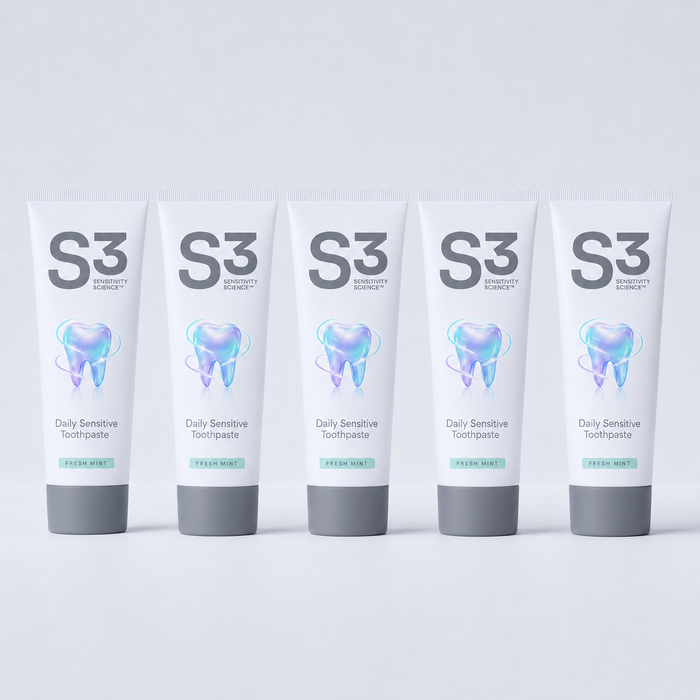
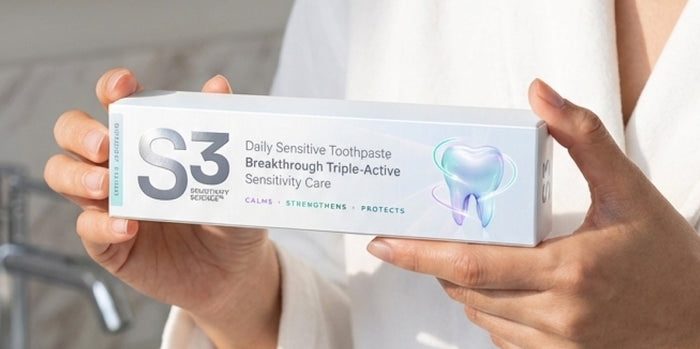
S3 Sensitivity Science™ was built on that gap. Our patent-pending S3 Repair Technology™ is a triple-active blend designed to do all three jobs together, with full adult-strength 1450 ppm fluoride alongside for decay protection, so it is a complete daily toothpaste rather than a treatment you use for a fortnight.
In S3's own consumer testing, 88 per cent of people said they felt less sensitive using it. Two habits get the most out of any sensitivity paste: use it twice a day without gaps, and spit rather than rinse, so the actives stay on the tooth instead of going down the sink.
See S3 Daily Sensitive Toothpaste, or read why teeth become sensitive in the first place.
Frequently asked questions.
Why are my teeth sensitive to cold but nothing else?
Cold produces the fastest and largest movement of the fluid inside the exposed channels in dentine, so it sets off the nerve more sharply than heat, sweetness or pressure. Many people are reactive to cold well before any other trigger registers, which is why it is usually the first sign of sensitivity.
Why do my teeth hurt when I breathe in cold air?
The same mechanism as a cold drink. Cold air moving across an exposed tooth surface cools it quickly enough to draw fluid outward inside the tubules, and the nerve reacts. It tends to affect the front teeth most, since they meet the air first, and it is often a sign that enamel is thin at the gumline or that the gum has receded.
How long does a sensitivity toothpaste take to work?
Give it consistent twice-daily use over several weeks rather than judging it after a few days. Nerve-calming actives build up over time, and mineral is deposited gradually. Spitting rather than rinsing after brushing makes a real difference. If there is no change at all after a couple of months, or the pain lingers after the trigger has gone, see a dentist.