Enamel is the hardest substance your body makes, and it is the only one that cannot repair itself. That single fact decides what “strengthening enamel” can honestly mean, and it is the part the category tends to skip.
The honest version of “rebuilding”.
Enamel is made by cells called ameloblasts, and they finish their work before the tooth erupts and then die. There are no enamel-forming cells left in an adult mouth. So when a toothpaste talks about rebuilding or repairing enamel, it cannot mean growing new enamel, because nothing can.
What it can mean, and what the research actually measures, is remineralisation: putting mineral back into a surface that acid has partly dissolved. Enamel is a crystal lattice of mineral, mostly hydroxyapatite. Every time the pH in your mouth drops, whether from a fizzy drink, fruit, wine or the acid your plaque bacteria produce, mineral leaches out of that lattice. Between attacks, saliva and whatever you have applied puts mineral back in.
Enamel loss is when the balance of those two processes is tipped towards demineralisation. Strengthening enamel means shifting the balance: fewer and shorter acid attacks, and better mineral supply in between. It does not mean regrowing what has already gone. Where enamel has physically worn away, as we describe in tooth enamel erosion, that loss is permanent and the goal is to stop it going further.
What actually helps.
1. Change when you eat acid, not just how much.
This is the biggest lever and the least used one. A glass of orange juice with breakfast is one acid attack. The same glass sipped over an hour is a continuous one, and the mouth never gets back above the threshold at which mineral returns.
So: keep acidic food and drink to mealtimes, drink them reasonably quickly rather than grazing, and use water between meals. A straw helps for drinks. And counterintuitively, do not brush immediately after something acidic. The surface is softened for a while afterwards, and brushing it then removes more mineral than it protects. Wait an hour.
2. Fix the brushing, not the brand.
Two minutes, twice a day, last thing at night and one other time.6 A soft or medium brush angled towards the gumline, letting the bristles do the work rather than scrubbing. Pressure does not clean better; an electric brush with a pressure sensor is a cheap way to find out how hard you actually push.
3. Spit, do not rinse.
The most underrated habit in oral care. Rinsing your mouth with water after brushing washes away the fluoride and mineral you have just applied, at exactly the moment it would otherwise be working. Spit out the excess and leave the rest. This is free, takes no time, and most people have never been told.
4. Keep fluoride in the routine.
Fluoride draws into the enamel surface during and after an acid attack and forms a mineral that dissolves at a lower pH than the original. It raises the threshold at which enamel starts to give way. The Cochrane review of fluoride toothpaste concentrations shows a clear, dose-related benefit for decay.5 It is the best-evidenced thing you can put on a tooth.
5. Supply the mineral enamel is made from.
Hydroxyapatite is the mineral in enamel, so putting it in a toothpaste is a direct approach: rather than only making the existing mineral tougher, you supply more of it. In-vitro work has shown nano hydroxyapatite paste remineralising both enamel and dentine,1 and an in-vivo comparative study found a biomimetic zinc-carbonate hydroxyapatite toothpaste repairing the enamel surface.2 A randomised clinical trial in a young population reported a remineralising effect for biomimetic hydroxyapatite,3 and research has looked specifically at hydroxyapatite and fluoride used together.4
6. Deal with the causes upstream.
Acid reflux, frequent vomiting, some medications that cause dry mouth, and grinding all wear enamel faster than diet does, and none of them is a toothpaste problem. If any apply, that conversation with your dentist or GP is worth more than any product change.
What does not help, whatever you have read.
- Charcoal pastes. Abrasive, poorly evidenced, and frequently fluoride-free. On a thin surface this is the wrong direction.
- Brushing harder or more often than twice a day. Neither adds protection, and both add wear.
- Lemon water, apple cider vinegar or bicarbonate scrubs. Two of those are acids and the third is an abrasive.
- Anything claiming to regrow enamel. Nothing does. Remineralisation is real and worth doing, but it is a different claim.
Where S3 comes in.
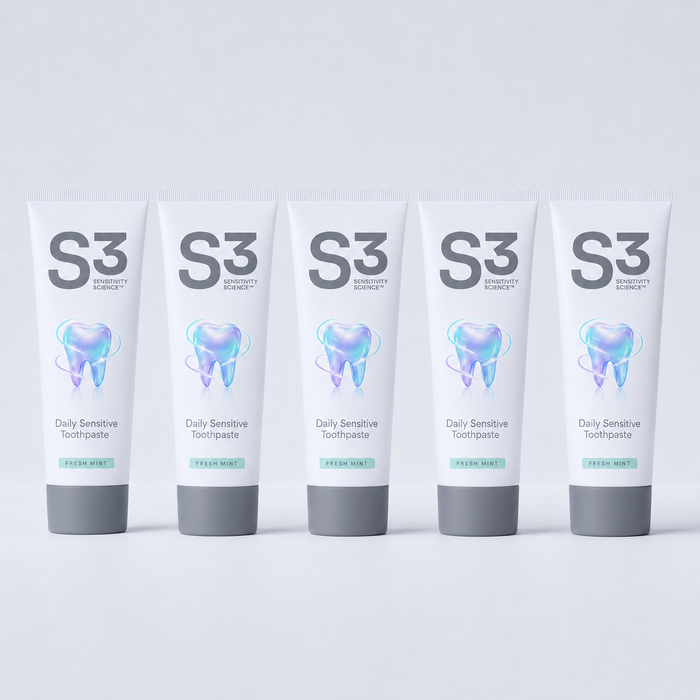
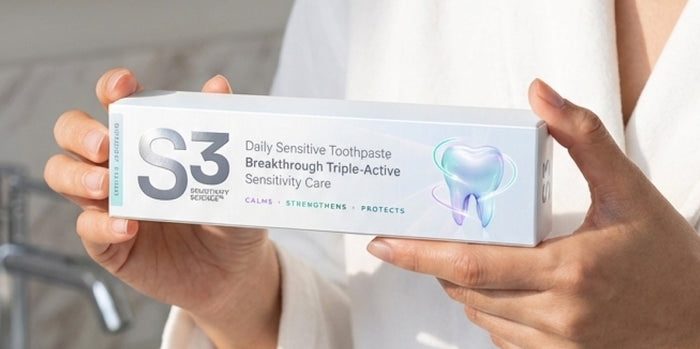
S3 Daily Sensitive was built for teeth that are sensitive because the surface has worn thin, which is why it carries mineral technologies and a nerve-calming active rather than one or the other.
With full adult-strength fluoride as sodium monofluorophosphate, free from SLS, and vegan and cruelty free. If the sensitivity itself is the problem you want solved first, start with how to stop sensitive teeth pain.
You cannot grow enamel back. You can stop losing it, and you can put mineral into what is left. Everything useful happens inside that sentence.
Frequently asked questions.
Can tooth enamel be rebuilt?
Not in the sense of growing new enamel. The cells that make enamel die before the tooth erupts, so lost enamel does not come back. What is possible is remineralisation, putting mineral back into a surface that acid has softened, which is what fluoride and hydroxyapatite are studied for.
How long does it take to strengthen enamel?
Remineralisation happens continuously, in small amounts, between acid attacks. There is no single point at which it is finished. The realistic framing is that consistent habits shift the daily balance in your favour, and the change is measured in months rather than days.
What is the best toothpaste for strengthening enamel?
One you will use twice a day that contains fluoride, and, if the surface is already worn and sensitive, one that also supplies hydroxyapatite. Avoid highly abrasive pastes, including most charcoal ones, on a surface that is already thin.
Should I brush after drinking something acidic?
No, wait about an hour. Enamel is softened for a while after an acid attack, and brushing it in that state removes more mineral than leaving it does. Rinsing with plain water straight afterwards is fine.
Does enamel loss cause sensitivity?
Often, yes. As enamel thins, the dentine beneath is closer to the surface, and dentine carries microscopic channels running towards the nerve. That is why worn enamel and cold sensitivity so frequently arrive together.
Is hydroxyapatite better than fluoride for enamel?
They do different things and work well together. Fluoride makes the existing mineral more resistant to acid; hydroxyapatite supplies the mineral itself. There is no need to choose, and S3 Daily Sensitive contains both.
Mineral technologies plus fluoride, in a paste made for teeth that have already worn thin. Try S3 Daily Sensitive.
This article is general information, not dental advice. If your teeth are visibly worn, chipped or increasingly sensitive, see your dentist.